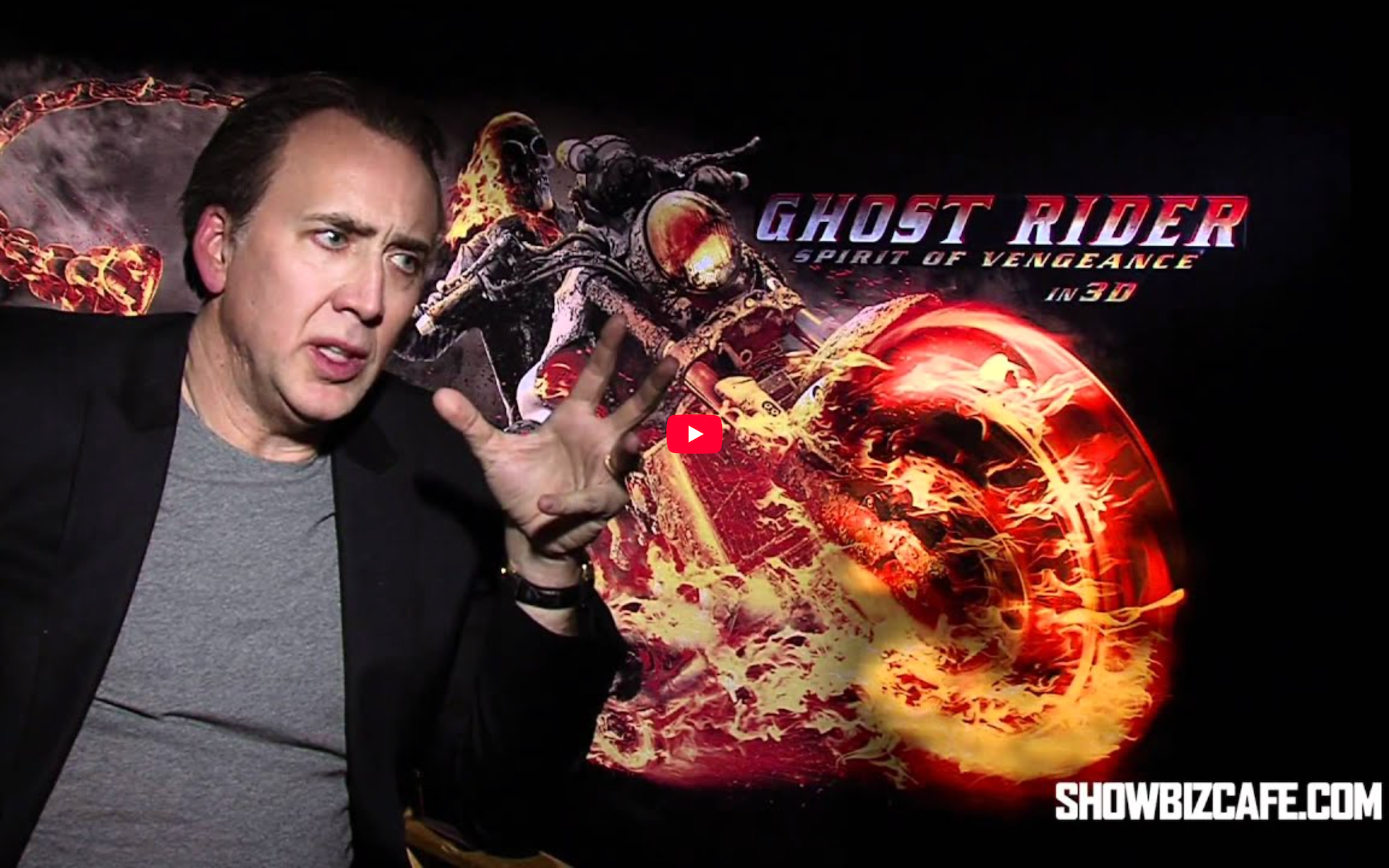
In our ShowBizCafe archives, we are resurfacing this interview with actor Nicolas Cage that has become a bit of a cult classic because of the raw honesty of his answers. You were talking to a person, not a celebrity.
Long before The Unbearable Weight of Massive Talent turned his career into the meta-narrative, Nicolas Cage sat down with me for one of the most honest and truthful interviews we have ever done with a Hollywood star.
Instead of the usual soundbites, Cage gave us a rare glimpse into the person, not the actor. We spoke about the topics that have since defined his internet legacy: having to work so much for the money, what he wants people to think of his acting career when he retires, and the declaration of his disdain for promoting his films.
The “Instrument” and The Paycheck
Cage has long faced criticism for his prolific output, often attributed solely to financial woes. In this candid discussion, he addresses those claims head-on. While admitting that “necessity is the mother of invention,” Cage reveals a deeper artistic compulsion behind his schedule.
“When I don’t work for a while… I feel rusty, I feel scared, I feel like the instrument isn’t in shape,” Cage explains. He describes acting not just as a job, but as a muscular “instrument” that requires constant tuning to remain fluid.
A “Counter-Cultural” Legacy
When we talk about his legacy, Cage rejects the traditional Hollywood metrics of awards or magazine covers.
“I want it to be counter-cultural, but ultimately cultural,” he says. He points to his embrace of horror and avant-garde cinema as evidence that he followed his own muse rather than vanity.
The Led Zeppelin Theory
Perhaps the most meta-moment of this interview is his deconstruction of the press tour itself. Cage compares the ideal artist persona to Led Zeppelin. He says they’re a band that became the biggest in the world while remaining “infinitely mysterious” by avoiding the press.
“I think it’s a detriment to the work because you should never explain your work,” Cage argues. “Once you explain it, you rob it of its mystery.”