Namreta Kumar Archives | ShowBizCafe.com

Namreta Kumar Archives | ShowBizCafe.com

Namreta Kumar

By

2011/07/06 at 12:00am

Sneak Peak: The Smurfs set visit

07.6.2011 | By |

Sneak Peak: The Smurfs set visit

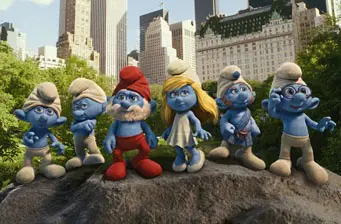
Of all the nostalgia and young memories New York has to offer, for movie goers and movie lovers, Kauffman Studios is probably at the top of their list. No matter what location a movie is filmed at in New York, nothing says filmmaking like Kauffman Astoria Studios. So of course, in true escapist tradition, The Smurfs choose none other than Kauffman to invade as their and our window to the true blue adventure:

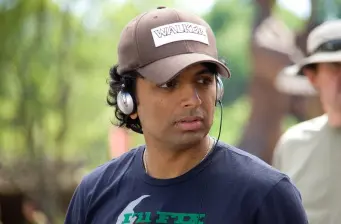
On the last day of filming, back in 2010, we were invited to join cast and crew on the sets of The Smurfs. One E train ride later I was standing in the front of historic Kauffman and about to partake on another “underground” journey.

The press trickles into the atrium of the studio and we all begin to wonder at the pictures and pros of past films around us. We are then greeted and escorted through a corridor on the left and upstairs through a set of cubicles, into which we shamelessly peer in for glimpses of what we are about to see and magic of filmmaking. We make it over to open space lined with chairs facing a stool in the front and center of the room.

As we sit idling checking our phones and tape recorders we start to piece together our memories of the Smurfs as we knew them, when we are greeted by the actor who, now, probably knows them best: Neil Patrick Harris (NPH).

Neil Patrick Harris (NPH):
“I am done. My work wrapped yesterday. I came here to talk for a bit, watch a little dance.”

Press: Was it all done here, in New York?

NPH: “We were here. HERE, here for most of it. There was a chunk in the middle where we went to FAO Swartz, and Central Park a lot, Prospect Park… but most of it was here.

Press: Are you singing and dancing?

NPH: “None for me.”

Press: Aww…

NPH: “I am very average husband and father.”

Press: How tricky was it dealing with the Green Screen aspect of it?

NPH: “I thought there would be more Green Screen. I thought it was going to be… I was really looking forward to that. I have always really wanted to do one of those things where you stare at the tennis ball as much as much the sticks that chase you around; but this was not that. The technology now, it’s in actual sets. You rehearse it with sort of these gelatinous, like jelly mold, Smurfs that are on stands. So that when you are rehearsing it they set them up in various positions, so you know exactly were they would be, you know the exact height they are supposed to be, and then you rehearse it that way with voice over people. And then they just move them away right before you shoot, and you look at, sort of, were the eyes would be. So no, only Hank [Azaria] really did the Green Screen stuff, because of Smurf Village.

Press: Can you talk about the sensibility of the movie.

NPH: “This is a family movie, but skewed an awful lot towards the core audience of people that watched the Smurfs growing up. They go from happy, happy Smurf Village to Central Park, New York City, so there is a lot of juxtaposition between angry New Yorkers. So you will see them trying to make everyone pleased.

Our conversation digresses there into Neil Patrick Harris’ other projects and then back around to the Smurf Design. For which, we are told to consult with Jordan Kerner (Jordon), and then escorted to another conference room lined with artwork and storyboard. In front of us there is a TV, but the artwork around us takes center stage in our curious minds. After a short wait we are joined by Jordon Kerner, who talks us through the design and the technical aspects of the film.

Jordon: “I apologies we are in the midst of the very last, last scene of the movie. As you guys come down you’ll see, it’s Gargamel’s dream at the end of the movie, he sees himself in his own music video. Glen Boward and Dave Stewart wrote the song. Glen is actually downstairs with us right now. We are recording forty dancers. It’s really cool, so you’ll see it when you come down.”

He then proceeds to direct us through the artwork on the walls, of the East Side apartment, where Clumsy Smurf is first discovered, the Smurf Village, Gargamel’s Castle, Gargamel’s map, and an important* Cavern. Without giving away too much of the movie here, let’s just say that these very detailed and captivating pieces of artwork outline where the story begins to when they are discovered in NYC, and some little gems about Patrick (Neil Patrick Harris) and Grace’s (Jayma Mays) journey to come.

Jordon: “What you see here is what you will see in a moment, Belvedere Castle. We built an exact replica of Belvedere, virtually to scale. It’s scaled in certain ways in length, but not in width because we had a certain amount of limitation on us by the size of the stage. But this very large closet area in Belvedere is a lot of concrete, so it didn’t really look that great when we saw it so we built in it a grate that you’ll see being used when you come downstairs. We did two little inserts that are here on either side. These are usually flat walls in Belvedere, but we have added these in for architectural interest. The reason we did all that, we built this whole set because you have an excellent conservancy in New York. With the park they wouldn’t let us put anything on a tripod and we couldn’t use a dolly, or any of that stuff. We could much further away, and we could get our wide shots but we couldn’t really shoot in this area. So we had to build the castle, because we loved the idea of Gargamel taking over the Belvedere castle.

He then proceeds to explain the procedure and nature of the scene, which we will be viewing shortly. Jordon then introduces to the prop of interest, which I will introduce to again below when we head down towards the set and props. But before we get there we are introduced to some of the animation and “photo-real” CG techniques used to bring The Smurfs and Gargamel to life.

Jordon: “Can we hit the lights?”

When we make down the maze of studio corridors and elevators, we are greeted by props lining the walls and a tall back stage, from the corner of which we can here the scored music video that is currently filming and will air at the end of the film. A small area is set for us to sit between props and watch the AV feed as cuts are recorded and re-shot. It is reel Hollywood in its real setting. Two by two as we were instructed, upstairs, we each get to go behind the curtain and into the staged Belvedere Castle to view what only the Cast and Crew get to otherwise see. And it is the splendor of detailed design, a regulated choreography, and of course the fun of the misstep and the perfect shot.

For some native New Yorker seeing a shoot on location is like taking a morning stroll, but to be in the studio redesigned and refitted to New York is not the same thing. In the large closet within Belvedere Castle, there are multiple monitors set up and an angled view for the crew to keep watchful eye of what gets captured. Outside Belvedere Castle about forty dancers walk in sync to Gargamel’s dreams of capturing the Smurfs. Once your ten minutes of fame are up, we walk back around the curtain and curious eye the props, until the dreamer Gargamel, or Hank Azaria (Hank) arrives:

Hank: “Yeah he’s Gargamel, what else can you say about him. He hates Smurfs and wants to conquer the world. Don’t know what else there is to say. He’s a Virgo. Loves water sports…”

As Hank gets called to set, we engage ourselves, for the last time, with the Smurfalator.

Jordon: “The Smufalator is very important because as a notion Gargamel, when he sang, or when he talked about the Smurfs he often talked about them with the notion of eat, ‘I want to roost them and roost them, I want to eat them, I want to turn them into gold or Smurf soup.’ SO rather than taking that literally, we tried to take it allegorically because Gargamel is a really smart guy even though he isn’t a smart sorcerer. Then if he ate all the Smurfs and boiled them that would be the end of it and his magic would only increase for a moment and they are magical creatures which is why he wants to eat them and get them but it would only last for a limited period of time and the power would be gone. Instead we thought, slightly more deviously, that he is going to harvest them. What that means is that he is going to capture them, he is going to shave papa’s beard, he is going to cut Smurfete’s hair, he’s going to make them sweat and gather the sweat, he is going to make them cry and gather the tears. And you will see how the Smurfalator works with that. There is a conveyer belt and chair goes right in there and the doors close. You can see steam coming out and going into the system makes it into a Frankenstein’s lab.”

A prop’s crewmember showed us the Smurfalator in action, and then walked us through Gargamel’s lab props, while the tail end press invited watched the final scenes of the filming completed. And another E train ride later, the Queens studio seemed to be another young memory of New York movie magic.

Namreta Kumar

By

2010/08/13 at 12:00am

Eat, Pray, Love (Movie Review)

08.13.2010 | By |

*Updated March 2026

Although Eat Pray Love promises a heartwarming search for meaning, the adaptation unfortunately fails to reach deep enough. Read More

Namreta Kumar

By

2010/07/01 at 12:00am

The Last Airbender (Movie Review)

07.1.2010 | By |

The Last Airbender

M. Night Shyamalan’s The Last Airbender does not live up to any hype. Not for fans of Shyamalan or for fans of the series. Unlike M. Night Shyamalan’s other films this is an adapted concept and thus not his usual cup of tea.

It shocked me to learn how short the film was but watching the film it is obvious how an approximate twenty-hour season fit into a less than two-hour film. For those of you that do not know the story it is about Aang, played by Noah Ringer, and his journey of becoming the Avatar. The first season or Book One is about Aang taking the first step of understanding his destiny and learning the second of four elements as the Avatar: Water. The film does not cover the intricacies of the characters involved in his journey or build narrative comparatively. It seems that as a writer Shyamalan failed to capture The Last Airbender.

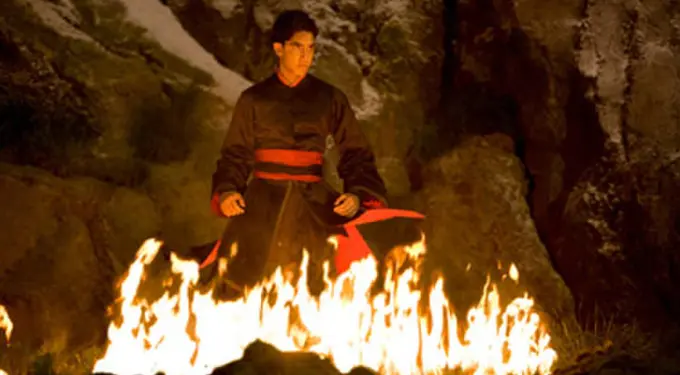
Some of the blame of the writing process is shared with the editing process. Whether it be editing within the screenwriting process or in post too much of the crux of the film is cut or altered making it hard to follow or enjoy. The reprise here is in M. Night Shyamalan’s direction. As the screenwriter, Shyamalan was able to control much more of his characterization and his directorial touch shines through Dev Patel, as Prince Zuko. Zuko is Aang’s antithesis and without him Aang’s destiny is not complete. M. Night Shyamalan centers a great amount of this film on establishing the base for that relationship.

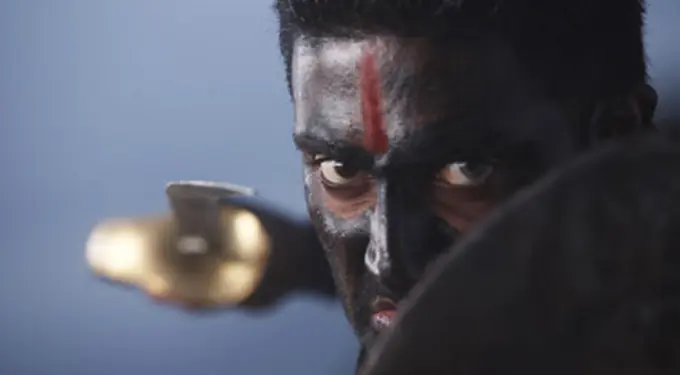
Dev Patel and Noah Ringer both play their parts very well. Ringer is M. Night Shyamalan’s The Last Airbender. As Aang he does not share the same carefree attitude characteristic of his television counterpart; but he excels as Shyamalan’s troubled Aang. Patel as Prince Zuko brings the spirit of the television series with him. He is the perfect balance of the powerful, troubled, confused, but fair Prince looking for his destiny. Patel outshines the others who seem to still be finding the right niche in comparison.

With the exception of the opening credits the role that 3D plays in the film is lost on me; it is not required for a film that never develops beyond its narration. The cinematography is best on location, from there it starts to become apparent that the remainder of the film is shot on sets and the production value starts to dwindle. To much of the film relies on the authenticity of production but the audience looses that to the concept of 3D and the editing too often.

Unfortunately expectations of M. Night Shyamalan films are always high and The Last Airbender just does not live of to his other body of work. Shyamalan has a great story here and his vision is clear within his direction, but the production does not make the same impact. He clearly needed to work on the editing process of the film and focus on his storytelling strength more than the high-end production value. This does not exemplify M. Night Shyamalan’s potential but more over seems to be crushing him.

Namreta Kumar

By

2010/07/01 at 12:00am

The Last Airbender: M. Night Shyamalan and Dev Patel Interview

07.1.2010 | By |

*Updated December 2025

In this M. Night Shyamalan The Last Airbender interview, the director and star Dev Patel discuss the challenges of adapting the beloved Nickelodeon animated series. While the film sparked significant conversation regarding its casting and tone, this Q&A offers insight into the creative decisions made during production. (For a critical look at the final film, read our The Last Airbender review.) Read More

Namreta Kumar

By

2010/06/18 at 12:00am

Raavan (Movie Review)

06.18.2010 | By |

Raavan: Movie Review

Raavan is a film much like its inspiration, it hangs somewhere indistinctly between good and bad. This film has such undeniably great moment, you must watch it; but because something doesn’t quite add up it may just fall by the wayside for most.

Beera, played by Abhishek Bachchan, is the Raavan of this story. He is a man living in a remote corner of India, Lal Maati, who has taken on the role of Robin Hood for the lower class by terrorizing the upper class and creating his own law making system. Dev Pratap Sharma, played by Vikram, is not quite Ram, he is much more human and arrives in Lal Maati assuming that the world is distinct shades of black and white. Aishwariya Rai Bachchan essays the role of Ragini, who is a very interesting version of Sita. Unlike the epic Ramayana this is much more a story of these characters and most specifically Raavan and SIta.

Mani Ratnam has a very strong grasp of his story and it shows in the very intriguing writing and the distinguished direction that he lends to it. Unfortunately he spent too much time making Beera seem more human than his primal instincts and thus the balance he was trying to achieve gets muddled in what the audience perceives. Another loss was the acting by the leads. The strongest performance was delivered by Govinda, playing the role of Sanjeevani Kumar or Hanuman. Not only was he the most convincing but it seems his was the only actor and therefore character that understood what was really happening here.

The best part of the story, by far, was the excellent cinematography. Santosh Sivan and V. Manikandan provided some of the best parts of the film through their colorful and distinct vision. The best scenes between the leads are almost only so because of the story arc provided by the visuals. Even though the story gets muddled in poor acting the core of Raavan is in its visuals, direction, and music. AR Rahman’s music paces the film in conjunction with the direction and has a way of being stuck in your head hours later. Each track is blended into the script with the background score so well it seems only natural.

The first two things I distinctly remember wanting to experience again from this movie is the excellent cinematography and the music that movies it forward. If you like films that resonate in the quieter moments, this is a film for you; otherwise it is perhaps better taken in at your own leisurely assessment at home.

SBC Staff

By

2010/06/17 at 12:00am

Toy Story 3 (Movie Review)

06.17.2010 | By |

Toy Story 3

How many ways can we say Pixar does it again? The best things about Disney-Pixar‘s repeat success is the oxymoronic innovation it brings with.

Toy Story 3 sets a precedent all its own. The film is a natural resolution for long-term fans, but equally rewarding to new comers. The film picks up days before Andy is going to leave for college. Due to some miscommunication between Andy and his mother, our favorite toys end up bound for Sunnyside Day Care. The adventure of finding their true home begins there.

As is the case with sequels and trilogies, there is always the fear of destroying the original, but with Toy Story 3 the story development and screenplay is as consistent as the first. Pixar does a very good job of making sure the integrity of the first two Toy Stories remain in tact, while consistently creating the next chapter.

Furthermore, like the first Toy Story, technological innovation is a major component to the success of Toy Story 3. Unlike other films in which you can easily forsake 3D as a waste, Toy Story 3 uses 3D seamlessly. It is not a gimmick but a component of the film that places you into the wonderful world of the Toys.

As for the Toys themselves, they definitely have grown and they definitely have diversified. A large new cast is added to the film, but no screen time is lost on the old favorites. Woody (Tom Hanks) and Buzz (Tim Allen) still share the same undeniable friendship. Woody and Jesse (Joan Cusack) still feel like they are opposite sides of an issue. Buzz is still in love with Jesse, but he is finally able to express that infatuation thanks to a little Spanish charm.

These endearing moments lead to certain heartache at the climax of the film that is bound to move you. Thanks to the high quality animation and the true to heart development of the story you don’t necessarily need to know all the characters to be swept away by the film’s layered message.

Whether you are a child or an adult, whether you have seen other Toy Story films or not (which if you haven’t do yourself a favor and watch them too), whether you like innovation or story, Toy Story 3 is one film not to be missed.

Namreta Kumar

By

2010/06/15 at 12:00am

My Sneak Peak at Pixar Studios

06.15.2010 | By |

My Sneak Peak at Pixar Studios

As a member of the press you may attend many press junkets over the course of your career. Some you will remember because the film was good, others because the staff was rude; your first just because it was your first. However if your first happens to be at Pixar you will be hard pressed to find a better experience; Pixar Animation Studios is simply unforgettable.

Late Thursday afternoon I got a voicemail from Jack proclaiming an exceptional opportunity has presented itself and he would like for me to get back to him as soon as possible. Now just so you all know I am not much for the leash that is a smart-phone, so we continued to play phone tag into the late hours of the night. Eventually I received an email that went something like this:


“Hey Namreta,

ShowBizCafe was offered to go to San Francisco to do the junket with the stars. I’d love for you to be able to experience something this cool at the Pixar Studios. It’s this Saturday.

Thanks.”

At this point I was just ecstatic to go see Toy Story, San Francisco was just going to be icing on the cake. Boy, was I wrong. Watching Toy Story 3 was just the tip of the iceberg.

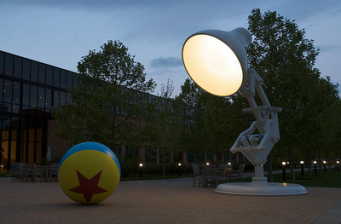
As we pull up to Pixar Animation Studios for the first time, I begin to realize that Jack just gave me the opportunity of a lifetime, newbie or veteran. It is around six-thirty pm as we all walk toward the front entrance. Outside is a huge replica of the iconic Pixar desk spotlight, Luxo, and the classic toy ball, at the door is the Sunnyside Daycare Welcome sign we are all going to soon add to our repertoire.

As we walk into this warehouse turned studio/office of modern filmmaking at its best there stands a monument of Pixar’s perfection: a life size replica of Ken’s Dollhouse with every detail intact, even a working elevator. We all sign in to our right. Behind the sign-in desk is a case of all the well-deserved awards Pixar has amassed, down to what looks like the Piston Cup itself.

The first night at Pixar we are already being treated to a very special screening in their very own screening room. Being from the New York City area, all the screening rooms I am accustomed to come through floors of elevators to the renovated side of a building. They are spectacular experiences to be had, but they are not The Pixar Screening Room:

We all file into a traditional theatre, red velvet on oak paneled seats with a beautiful curtain to cover the screen. As the house lights turn off, the constellations above reveal themselves. Yes I said constellations, Pixar has re-created stars for the ceiling of the screening room. Complete with shooting stars, Orion’s Belt, The Big Dipper etc. And the film starts with the classic short, another success in Pixar’s case. As Toy Story 3’s credits come to a close I am still glued to my seat. The desk lamp jumps across the screen for the last shot and its beam of light brings on the house lights.

And so at this late hour I still find myself wide-awake, and I am working on NY time. We step outside and realize our sneaking suspicion of the desk lamp outside being turned on for passersby(s) of night is true. The outdoors picnic tables of the entrance are lit by non-other than Luxo.

The following afternoon we return to the site for lunch and our third treat: A tour of The Pixar Animation Studios! More than a tour it is an intimate look at the studios and the movie-making process. Much like the movies themselves the studios are built entirely by Pixar, every last detail. Steve Jobs policy is just that and every screw in the studio has been hand turned to make the studio as much a home as Pixar’s family.

That is the first fact our tour guide pervades us with as we walk through the skylight atrium towards Pixar’s very own café. Even though the food there is good the average employee diet consists mostly of cereal, any and every kind of cereal you can imagine. The places I have worked have had coffee bars and health bars, but Pixar’s kitchens (they have a few spread out through the floors) have cereal bars that the employee’s love to indulge in. If you are worried that too much cereal isn’t going to be healthy (enough) don’t worry they have bicycles that go from building to building for meetings, when they actually have to stop working because we know they never want to, and they have yoga classes for staff in the atrium. But enough about employee perks, how and where the magic happens: In one sentence, it is approximately a four-year process, one and half for story and the following for development.

Screenwriters rejoice, Pixar is a proponent of excellent story-telling due to massive amounts of research, attention to detail, outlining, and constant story boarding. We begin our tour here, with the storyboards that line the upstairs corner in the far left of the studios. On display today are the much-edited original storyboards of “Finding Nemo,” specifically when the shark swallows Marlin and Dory. Just so we are all on the same page, I say much edited because it is almost like looking at an outline of a storyboard. As each character is developed and each plot line explored the whole staff strips each and every possible world before handing over this completed leg of Pixar magic. The story is airtight because this work, much like the next steps, has its in house critics and critiques.

From here we walk along the corridor to the upstairs front left corner. Along the wall are frames of step-by-step artwork that is rotated throughout the year to showcase Pixar’s talent hobbies and talent. In this very corner we begin to discuss the one question that is on all our minds: How can I have your job at Pixar? The straight and narrow is this Pixar is a family. To work for Pixar is not a project-by-project resume building experience. So with a little perseverance and good timing you can fit the mold of the next employee, just remember to reapply on the website approximately every six months, and when you get the first call for an interview remember there can possibly be thirty-eight more to go. Yes we spoke with an engineer who got her job after thirty-nine interviews; of course she would go through them again considering the development of every strand of Violet’s hair is more than worth it.

Which brings us to the point of the tour when we cross the bridge to the right side of the upstairs studio and meet one of the Art Directors. Across the wall is a very colorful storyboard of Toy Story 3 (at least all the major points). Here we learn in great detail, how much detail is in every scene. For those of us who are not almost OCD, as I am, about color schemes and detailed palettes let me be the first to tell you that they can totally change the way you appreciate any Pixar movie, especially after you get a look at this wall. What is highlighted here is how color affects the viewer. So as not to give anything form the film away (mostly because I liked it and I don’t want to ruin it for anyone), let me just says this, the color of Andy’s clothes are not accidental, the serene lighting on Bonnie is supposed to make you think of her pure and innocent character, the eerie unsaturated grey’s are supposed to make you apprehensive, and as red always is it is a sign of danger. But Art Direction is not just color it is about the entire setting and much like Pixar is a family project, we learned that the paintings of all our favorite characters in Toy Story were drawn by non-other than Lee Unkrich’s children.

And so from the detailed model’s and another line up of highly organized artwork we are led back to the far right corner of the upstairs, from where we head to the very special software animation room. This room is perhaps one of the best parts of the tour, as they say save the best for last. So imagine a home theatre system, a relatively smaller room than screening rooms, with couches that rise to the back so everyone has the perfect view and comfort. In the center of the room is a set up of computers and engineering software. This is where every frame’s every detail is examined and cross-examined.

What I was privileged enough to see as an example was how Woody was updated to match the modern day animation engineering. Toy Story was the first computer animated film of it’s kind, but ten years later that original computer cannot stand up to its new competition so Woody was masterfully recreated from scratch. As we were told numerous times on our tour, think of each element, especially the characters, as software programs. When writing these programs there are a million different options, so how does Pixar know what to chose and where to draw the line. Simple, once a character is simulated everyone gets together, in groups, and they sift through acceptable changes and unacceptable changes.

As with everything Pixar, all of this work is done in house. So as everyone thanks Pixar for a great show and readies themselves for the interviews with the stars I take a moment to digest this surreal moment before the next.

Namreta Kumar

By

2010/06/02 at 12:00am

Raajneeti (Movie Review)

06.2.2010 | By |

Raajneeti

Raajneeti is a lengthy and problematic film. Although it tried to read like a modern Mahabharat, it ends up being a poor man’s version of The Great Indian Novel (by Shashi Tharoor).


For starters if you have no interest in politics don’t watch the film for the hype of the star-studded performance. No one truly shines with a solid performance, anyway. For the solid list of character actors the film is predicated on, not one character elicits enough sympathy within the audience. This may be because of the base problem in the script itself: everyone seems to either be playing multiple characters from the Mahabharat or the principal motivations have all been skewed bordering on disbelief.


Furthermore without a working knowledge of the Mahabharat it is rather difficult to follow the film. And if you have anything greater than a working knowledge you are sure to be disappointed by the bullet point version of the story. In trying to make a modern retelling Rajneeti lost both the original and the modern. Some of the language will definitely be lost on those who are not Hindi scholars and the rest to those who know little English.


Don’t look towards the music to be of any help either. Traditionally Bollywood film length and drama has been broken by the musical song and dance, Rajneeti has one ill placed and rather short rendition. Unfortunately the background score doesn’t win this film any favors either, as it is over dramatic and reclaims the scene for itself.


Stripped down to its core the film lacks proper development, however it does make the audience think. If it is true that you learn more from mistakes than success, this film forces everyone who watches it to think about story and character as by products of one another. The best thing about Rajneeti is its literary challenge and that isn’t saying much, considering the other films coming out of India today.

Jack Rico

By

2010/05/21 at 12:00am

Another ‘Kites’ Film Review

05.21.2010 | By |

*Updated 2026

In 2026, when global cinema moves across borders faster than ever, Kites reads like an earlier attempt to package Bollywood romance for a Hollywood-facing audience.

Read More

Namreta Kumar

By

2010/03/29 at 12:00am

The Greatest (Movie Review)

03.29.2010 | By |

The Greatest

The best parts of “The Greatest” are also its worst. Unfortunately, Shana Feste has created a film about spectacular moments but she failed to connect them.

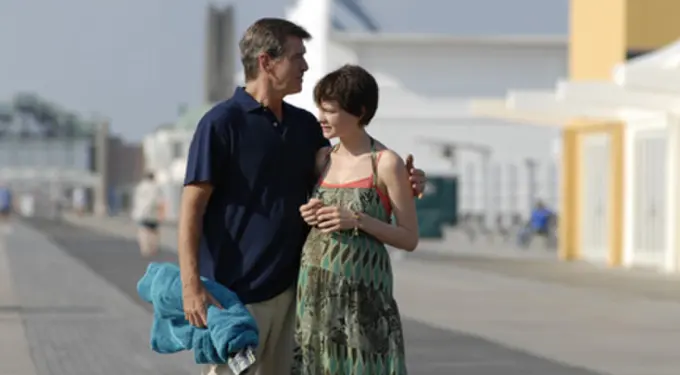
This family drama is all about life and death. It is about loss and strength. Allen (Pierce Brosnan) and Grace Brewter (Susan Sarandon) are faced with the death of their son, Bennett. At that moment walks in Rose (Carey Mulligan), pregnant with Bennett’s child.

What stays with me after the end of the film are some very distinct moments. The honesty with which Shana Feste crafts her scenes is remarkable and is the high point in the drama. Each character has their own catharsis, distinct of the rest. For a second it seems to fool you into thinking that you are with them. However, as you move to the next scene that link is broken. The overall film suffers from this disconnect.

The most powerful connection the audience does make is between Allen and Rose when Rose takes Allen to a “Wouldn’t Be Caught Dead In” party. This is one particular moment to watch out for Brosnan and Mulligan’s performance and the layers that Feste has created in this moment of joint abreaction. Another powerful moment of association to watch out for is between Brosnan and Sarandon at the beach.

The greatest moments of the film are the ones that bring more than one plot in face of another, and unfortunately the lack of those moments leaves to many holes in the film. Unlike films like Crash and Babel, that have multiple stories that connect to some end, this film has a constant connection that does not justify parallel plots.

Select a Page