Terry Kim Archives | ShowBizCafe.com

Terry Kim Archives | ShowBizCafe.com

Terry Kim

By

2009/12/16 at 12:00am

Crazy Heart (Movie Review)

12.16.2009 | By |

Crazy Heart

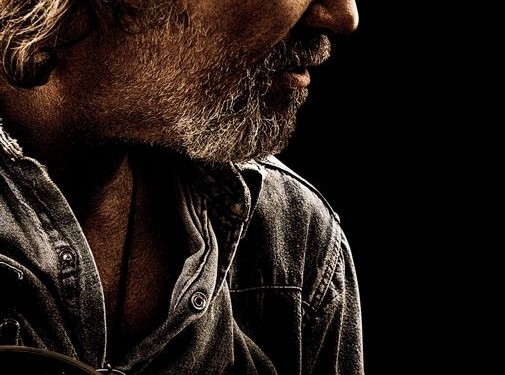
Crazy Heart is an underdog story—and an underdog story a few decades overdue, to be exact—about a fifty-seven year-old country singer, Bad Blake (Jeff Bridges). Blake is broke, has a twenty-eight year-old son he hasn’t seen since he was a toddler, and has a severe drinking problem. To top it off, he falls in love with a small-town reporter, Jean (Maggie Gyllenhaal), while performing in Santa Fe. Feeling a tad more reinvigorated from his new love, he decides to pick things up a bit, and slowly puts pen to paper after years without song writing. Just when he thinks things are looking its best, he hits rock bottom yet again: while baby-sitting Jean’s son at the mall, he loosens up with a drink at the bar, and loses sight of the kid in the process. After the mall ordeal, Jean storms off, leaving Blake all alone. After a few days of wallowing, Blake checks himself in to rehab, and finally finishes the songs he has been putting off for all those years. He finally accepts the fact that although he may no longer occupy center stage, he is happy knowing that his protégé, Tommy Sweet (Colin Farrell), will take over in his place.


Jeff Bridges has been nominated for four Oscars, and it is the sincerest wishes of many that he will take home his lucky fifth. I cannot help but compare the story, and Bridges’ performance to last year’s The Wrestler, in which Mickey Rourke also played a world-weary man, looking for a way back in. Crazy Heart does not boast any fancy camerawork, so Bridges’ acting inevitably steals the spotlight. One can almost smell the whiskey from off screen, as he lugs himself around dusty motels. He is also personally invested as one of the executive producers of the film. Robert Duvall also appears in the film as Blake’s old friend, and is one of the producers as well.


Crazy Heart is an honest tale about how it is never too late to get your life back on track, and about taking your trials and tribulations and channeling them through an art form, like music. All music was done by T Bone Burnett, who is a music producer renowned for soundtracks like O Brother, Where Art Thou?, Cold Mountain, Walk the Line, and The Big Lebowski. It is interesting to hear some of Blake’s songs repeated throughout the film, a realistic depiction of the redundancy entertainers are subjected to; indeed, some of the live performances, whether they take place in bars or bowling alleys, begin to weld together so that they are indistinguishable from one another.


Coupled with the raw landscape of the American Midwest and the mellifluous country music, Crazy Heart is not only recommended for all y’all boots-toting cowboys out there, but for anybody suffering from heartache and mental blocks, and could use a buoyant story about an old dog that can learn new tricks.
Terry Kim

By

2009/12/11 at 12:00am

A Single Man (Movie Review)

12.11.2009 | By |

A Single Man

Since Tom Ford was such a successful designer—he is credited for reviving Gucci and Yves Saint Laurent—it was a surprise to many when he left Gucci Group in 2004. It was all the more surprising, therefore, when he started a film production company. A Single Man is his first feature, and one that shows potential for more good films to come.


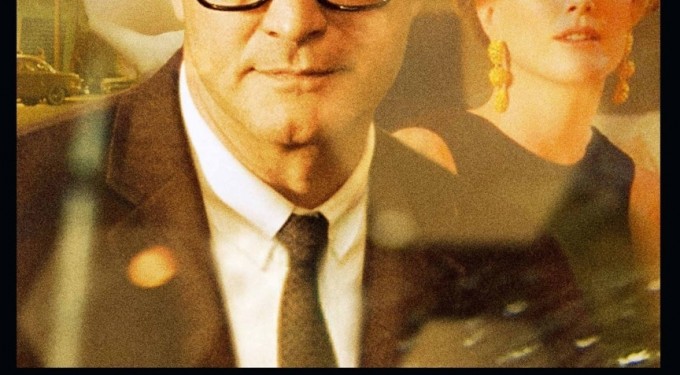
A Single Man is adapted from Christopher Isherwood’s novel by the same name, and is about a gay English professor, George (Colin Firth), who is grieving for his long-time partner, Jim (Matthew Goode). To put an end to his woe, George decides to terminate his own life; it is this “final” day that we spend with him, meeting old friends and new, making amends before he leaves for the netherworld. George’s life examination process brings to mind other great films of the past dealing with death and existential loneliness, such as Akira Kurosawa’s Ikiru (1952) and Ingmar Bergman’s Wild Strawberries (1957). In between George’s encounters throughout the day—most notably with his student, Kenny Potter (played by Nicholas Hoult), a beautiful Spanish youth, and his next-door neighbor, Mrs. Strunk (Ginnifer Goodwin)—are flashbacks to some of George and Jim’s happiest moments together, all painful reminders that Jim is now gone, and George is still alive. When George finally comes to terms with his past and begins to envision a more optimistic future, fate takes an ironic turn, and he succumbs after his final heart attack.


The visuals are stunningly beautiful, and the music is just as powerful (sometimes dominating the images, even). The former aspect owes itself to Ford’s former trade, along with the collaboration of the director of photography, Eduard Grau, and the editor, Joan Sobel; the latter is thanks to the compositions of Abel Korzeniowski and Shigeru Umebayashi (most noted for the score in Wong Kar-wai’s In the Mood for Love). Because the camera usually works with no more than two actors at a time, and because dialogue is equally concentrated, the viewer cannot be less than captivated. Colin Firth’s and Julianne Moore’s remarkable performances heighten the film experience; Colin Firth’s Best Actor Award at this year’s Venice Film Festival is thus well-deserved. Alas, there is even Oscar buzz for both actors.


It’s hard to miss the 1962 undercurrents, as references to the Cuban Missile Crisis blast from television sets and radio stations throughout the film. Our protagonist lives in an era in which the nuclear threat looms menacingly overhead. We are then confined further, into some of George’s interior monologues (the novel is composed almost entirely of these monologues), consisted mostly of self-pitying, morbid comments about the humdrum reality. Tom Ford also gave the character more dimension by using autobiographical elements. For example, George’s preparation for his suicide was modeled after a suicide in Ford’s family.


The film is a spiritual tale, one that, as Tom Ford mentioned in his director’s statement, makes you realize that “the small things in life are really the big things in life.”

Terry Kim

By

2009/11/21 at 12:00am

Me and Orson Welles (Movie Review)

11.21.2009 | By |

Me and Orson Welles

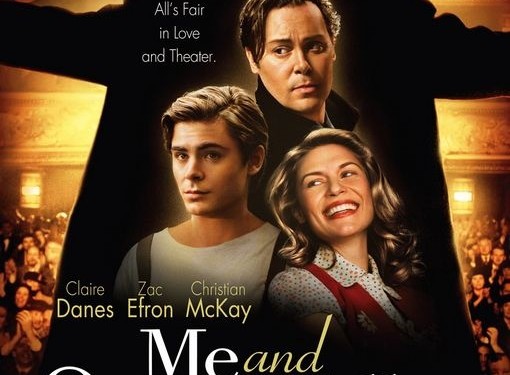
For those who recognize the name in the title of Richard Linklater’s latest film may have an immediate attraction (or immediate aversion) to it. After all, Orson Welles always lands itself in critics’ “top filmmakers of all time,” and his Citizen Kane (1941) makes it in “top ten most influential films” lists. Older generations may remember Welles from his radio days, and still others may remember him from his famous television commercials of the 70s. I’m willing to bet that members of the younger generation will watch this film in recognition of the High School Musical series heartthrob, Zac Efron (who plays the part of starry-eyed teenager Richard), the “me” in the title.


Me and Orson Welles is about seventeen year-old Richard, who is employed by Orson Welles to play a minor role in his first show at the Mercury Theatre, Shakespeare’s Julius Caesar. Richard and Welles get along for the most part—Welles even takes Richard to a radio studio, gives him a lift on his ambulance (the only way to wade through traffic in Manhattan), and affectionately calls him “junior”—until Richard falls for Sonja Jones, an assistant who is beautiful yet unapologetically ambitious. Sonja merely wishes to get ahead in life, and is unconcerned with love, art—basically all the ideals Richard identifies himself with. After a week of success and failure, love and heartbreak, Richard is ready to return to a less exhilarating, yet more wholesome, high school life.


Linklater—who made his name with the high school movie, Dazed and Confused (1993), and for the Before Sunrise/Before Sunset pair (1995 and 2004, respectively)—takes a somewhat different approach in Me and Orson Welles. The film is essentially a bildungsroman in 1937 New York, and therefore a period piece as well. The background is rather convincing: Linklater, along with production designer Laurence Dorman, handpicked the theater to pose as the then-Mercury Theatre, and he also selected the music, since he is a huge fan of 30s music. The film is indebted to the pre-existing material in Robert Kaplow’s novel, which he based in real theatrical history. Especially convincing is Christian McKay’s impersonation of Orson Welles, which is spine-chillingly identical.


The film can be most respected for its frankness, because it doesn’t dare to over-glamorize Welles, the Mercury Theatre, or the city, but only to see the aforementioned things through a naïve teenage boy’s eyes; think of it as a week-long orientation to the Big Apple. Linklater’s style is also equally simple: instead of relying on fancy computer editing, for example, he uses what I’d like to call “manual” montage (Richard catching bits of conversations as he walks through the opening night party scene; Richard flipping through newspaper headlines on Caesar). Welles is portrayed as the charismatic man he was known as, but we also glimpse moments of sensitivity, and it isn’t easy to simplify him as a heroic character or a villainous one. Perhaps a weaker delineation is that of Gretta (played by Zoe Kazan), and particularly her parallels to Richard. As they exit the museum, the two find themselves in differing paths of progress. This is, of course, the way things are: a writer is suddenly jet-set with her submission to The New Yorker (Gretta), and an aspiring actor performs only on the opening night of an anticipated production (Richard). Their sudden bonding at the end seems a bit contrived, however.


This film is a must-see for New Yorkers, would-be New Yorkers, good music, and anybody who wants to see the most accurate impression of Orson Welles to date.

Terry Kim

By

2009/11/09 at 12:00am

Pirate Radio (Movie Review)

11.9.2009 | By |

Pirate Radio

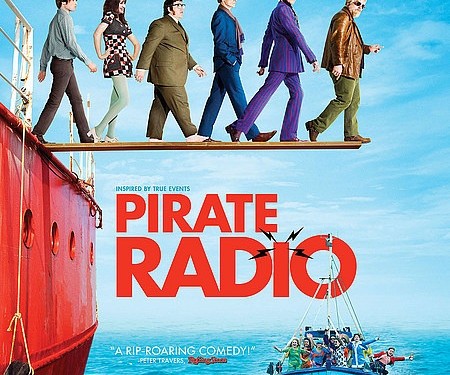
If you are fan of the 60s, and especially of 60s pop and rock music, then Pirate Radio is a must-see. There are more than fifty songs on the soundtrack, boasting familiar tunes by The Kinks, The Rolling Stones, and The Beach Boys, to name a few. The movie was written and directed by Richard Curtis—most well-known as the screenwriter of Four Weddings and a Funeral and for writing and directing the charming Christmas flick, Love Actually—who displayed his talent for quirky characterization again. It’s hard not to love the crew aboard Radio Rock: the American DJ who identifies himself as “The Count†(Philip Seymour Hoffman), the popular Gavin (Rhys Ifans), “Nutty†Angus (Rhys Darby), “Doctor†Dave (Nick Frost), Thick Kevin (Tom Brooke), Felicity (Katherine Parkinson), Simon (Chris O’Dowd), News John (Will Adamsdale), “Midnight Mark†(Tom Wisdom), mysterious Bob (Ralph Brown), Harold (Ike Hamilton), the newest member, young Carl (Tom Sturridge), and the captain responsible for them all, Quentin (Bill Nighy).


Days aboard Radio Rock feel like mere minutes as the crew/DJs takes part in the mantra of the 60s, “sex, drugs, and rock and roll.†On the other hand, certain individuals in the British government, namely Twatt (Jack Davenport) and Sir Dormandy (Kenneth Branagh), spend all their days and nights coming up with more laws to spoil Radio Rock’s chances of promoting their music and joie de vivre to the British public. If Radio Rock’s members are less concerned with personal hygiene and display so-called loose morals, Twatt and Sir Dormandy pout stiff upper lips and sport clean-shaven looks at all times. It proves difficult to bring the Rock cheer down: for every clever deterrant the Twatt-Dormandy team concocts, the rebellious crew conjures up another loophole. In fact, the crew even wavers on the brink of death, and still, this is not a challenge that cannot be overcome. Here, The Beatles’ famous line, “All you need is love†cannot be more relevant; love for music, that is.


You may be won over by the characters and music, but the movie’s fairytale-like progression is not as endearing. The camaraderie aboard the ship may be a touch too idealistic. One would like to believe that after a shipmate sleeps with your wife (of only seventeen hours) “to forgive and forget†is not as simple as it sounds. And not to mention young Carl’s revelation that his long-lost father is scruffy, bearded Bob is brought up, and then dismissed almost as an afterthought. It’s a hard-knock life in the rock and roll world, but when all that is displayed is love, loyalty, and too-willing sacrifice for the aforementioned virtues, the pirate rock world is transformed into Peter Pan and the Lost Boys in Neverland.

Terry Kim

By

2009/11/05 at 12:00am

The Men Who Stare at Goats (Movie Review)

11.5.2009 | By |

The Men Who Stare at Goats

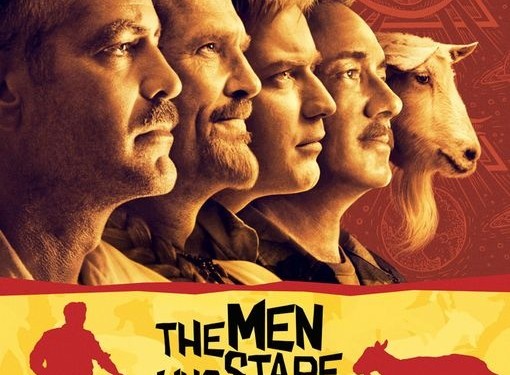
The Men Who Stare at Goats is based on a book by Jon Ronson of the same title, and judging by his track record—Ronson wrote books with titles like Out of the Ordinary: True Tales of Everyday Craziness and Them: Adventures With Extremists—it isn’t surprising that Heslov’s movie is an hour and a half of paranormal activity (or something like it) inside the U.S. Military. Bob Wilton (played by Ewan McGregor), at first searching for a way out of his heartbreak (his wife and college sweetheart leaves him for his one-armed editor), lands himself in uncanny situations that cannot possibly be real… or are they?


Bob begins his adventure in Kuwait City, where he runs into Lyn Cassady (played by George Clooney), who will ultimately be the link to the story behind the First Earth Battalion. When the Cassady-Wilton duo courageously ventures into the deserts of Iraq, the first big thing that happens is a car crash, and into a glaring boulder in the middle of the road, no less. Not to mention that the first “help” they acquire is a group of petty thugs that want to sell this clueless American pair. For Wilton’s first big adventure, he’s doing pretty great. Once he starts to glean out some of Cassady’s stories, however, he realizes that the U.S. Military isn’t as tough as it looks.


Meet Bill Django (Jeff Bridges), leader of the First Earth Battalion, who uses his “education” (if naked hot tub sessions count as education) to get his men in touch with Mother Earth. Lyn Cassady is Django’s main protégé, and when a fellow Battalion member, Larry Hooper (Kevin Spacey) enters their Garden of Eden, things go terribly amiss: Django gets a dishonorable discharge, and even worse, Cassady stares at a goat so intently that it drops dead. Lyn has thus traversed into the dark side, and to top it off, Larry taps him with the “death touch.” But not to worry; all ends well, with Bill’s vision of Timothy Leary, and some military breakfast laced with LSD. Thus Bob Wilton emerges, cured of his heartache, and in tune to his inner hippie.


The director of The Men Who Stare at Goats is Grant Heslov. This is his feature debut behind the camera, but not his first opportunity to join forces with Clooney. He co-wrote (with Clooney) and produced Good Night and Good Luck and filled similar producing duties for Leatherheads. The two men clearly know each other and work well together, and it shows in the easy way this movie unfolds. Heslov is not performing without a net. Who better than Clooney to lend a helping hand – a man who has learned from Soderbergh and the Coens and directed three films in his own right (two of which he collaborated with Heslov)?


George Clooney seems to have walked off the set of Burn After Reading and straight into this one: the expressions and the speech are identical. Comments on the acting aside, the laugh-out-loud moments are worth the psychedelic overload. The attention, however, appears to have gone mostly into the dialogue, and the audience knows all too well that dialogue alone does not carry a whole movie. If you’re looking for more reasons—as if there aren’t enough already—to scoff at our former president, look no further than The Men Who Stare at Goats. It’s always fun to make fun.

P.S. Warning to all hamster owners: remember to keep your furry friends away from glaring men.

Select a Page