News Headlines


Frankenstein (Movie Review)
02.14.2026



08.13.2008 | By Alex Florez |

*Updated December 2025
Not so long ago, New York-based director Woody Allen confessed to us that the reason there are never any prominent Hispanic characters in his films is because he sticks to what he knows. Woody Allen usually focuses on old Jewish families, upper-class Manhattanites, and chaotic love affairs that flirt with death.
So what does Allen now know about Catalonia and Spanish culture that prompts him to set his latest film on the Mediterranean coast? Other than the fact that they will finance his films?
To answer my own question, I think the appeal for Allen is the idea that sexual promiscuity and emotional confusion also exist outside New York. It seems to happen in practically every single corner of the globe.
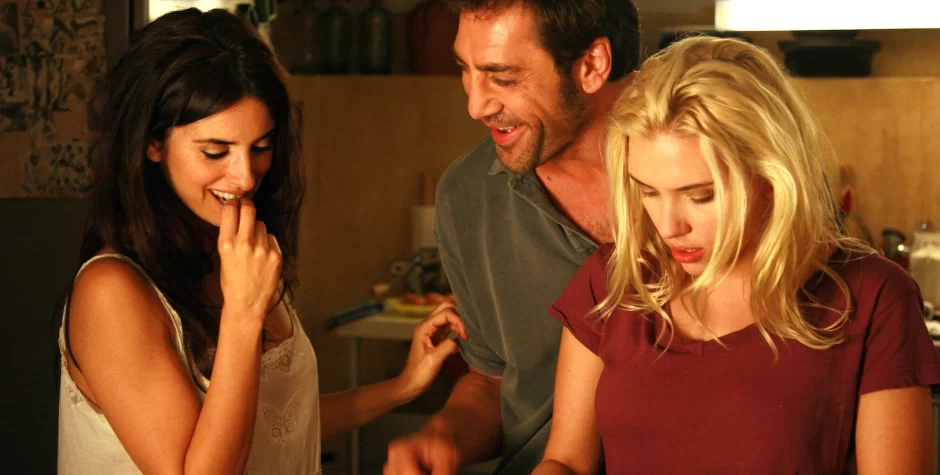
Vicky Cristina Barcelona, his first and most likely last film to be set in Spain, pits Scarlett Johansson (Cristina) and Rebecca Hall (Vicky) as two American friends spending their summer in Barcelona. Cristina, a wandering spirit, is always on the lookout for adventure. Vicky, on the other hand, is much more sensible and committed to her fiancé back home.
Their radically different attitudes towards love are tested when they meet Spanish painter Juan Antonio and his volatile ex-wife Maria Elena. A case can be made that Allen has made this same film 35 times over. As usual, you’ll find plenty of sarcasm, infidelity, and yes, a few rounds fired from a gun.
But the plot only sizzles when Penélope Cruz joins the cast. Her turbulent behavior is wildly reminiscent of Judy Davis’ brilliant performance in Allen’s Deconstructing Harry (1997).
Unfortunately, in this film, Cruz is the catalyst for an event that never arrives. The sense that something absurd, tragic, and utterly hilarious would take place in the end kept building throughout the film. That tension worked well in Crimes and Misdemeanors (1989), for instance.
Instead, this movie moves right along, one lustful scene after another. It leaves you wondering what sort of statement it wants to make about ‘love’ that it hasn’t already.
Then there’s the mysterious voiceover which threads the film together. It feels totally unnecessary given that it doesn’t really explain anything nor does it provide any insight from an omniscient point of view.
The movie’s funniest moments, without question, rely on the chemistry between Javier Bardem and Penélope Cruz. This gives way to the little momentum the film manages at times. It makes Johansson and Hall seem out of touch with the whole ‘Woody Allen genre’.
Hispanics, however, will marvel at how well Allen’s neurotic language translates into Spanish. While most of the film is spoken in English, the few scenes where Bardem and Cruz exchange a few words are hysterical. More evidence that these days, the international community seems to get Woody more than we do.
For more movie reviews, check out our Movie Reviews archive.